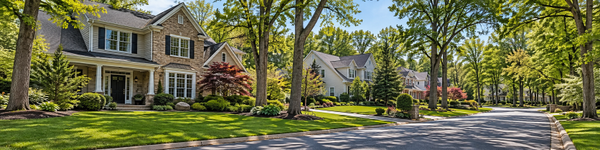
Selling Your Home in Haddonfield: Step-by-Step Guide

Selling your home in Haddonfield takes a clear pricing plan, a well-prepared property, and an organized path to closing. Whether you have owned for two years or twenty, the process includes more moving parts than many sellers expect, including pricing strategy, disclosures, timelines, and closing costs. This guide explains what to expect in this Camden County borough, from the decision to sell through the day you hand over the keys.
Haddonfield Home-Sale Market Snapshot: 2026
Haddonfield inventory remains tight, and homes are still selling above asking, but buyers are taking more time to decide than they did a year ago. The figures below describe single-family closed sales in Haddonfield Borough for August 2026 and year to date through August 2026.
| Metric | Current market reading |
|---|---|
| Median sale price, year to date | $999,999 |
| Median sale price, August 2026 | $1,126,000 |
| Average days on market, August 2026 | 35 days (12 days a year earlier) |
| Average days on market, year to date | 36 days (18 days a year earlier) |
| Percent of list price received, year to date | 102.2% (105.0% a year earlier) |
| Active inventory, end of August 2026 | 19 homes, about 1.8 months of supply |
What the Haddonfield Market Looks Like Right Now
Haddonfield is competitive for homes that are accurately priced and well maintained, while buyers remain selective about value and condition. Single-family homes sold for 102.2% of list price on average through August 2026, and 103.2% in August alone. What changed most over the past year was speed: average days on market roughly doubled year to date, from 18 to 36.
Those figures point to a market where a strong launch still attracts meaningful attention, but where buyers feel less rushed. In practice, that means more room for buyers to negotiate after the home inspection, so preparation and pricing matter more than they did when homes were going under contract in under two weeks. Properties with deferred maintenance, highly individualized updates, unusual layouts, or unsupported pricing can take longer to sell and may need more negotiation flexibility.
Haddonfield is also a small market. With 94 single-family closings year to date through August, a handful of sales can move a monthly median noticeably, so a single month's number should never be the only basis for a pricing decision.
Haddonfield's price range often draws buyers who evaluate details carefully. In the mid-range and luxury segments, renovation quality, lot usability, tax obligations, systems maintenance, and the overall ownership picture can influence an offer as much as square footage. Homes with a clear value proposition are better positioned to turn showings into serious conversations.
Compared with broader South Jersey trends, Haddonfield commands a higher price point and a more discerning buyer pool. That makes early preparation especially important. Reviewing current competition, recent closed sales, and likely buyer questions can help sellers make better decisions before the home reaches the market. Browsing the homes currently listed in Haddonfield gives you a quick sense of what buyers will compare yours against.
Selling Your Home in Haddonfield, Step 1: Decide When You Are Ready
The best time to sell is when your financial position, preparation timeline, and next move are all workable. Spring often brings increased buyer activity in Haddonfield because many households prefer to plan moves around school schedules and warmer weather. That period can increase showing traffic, but it can also bring more competing listings. With new listings down from a year ago, a well-prepared home listed outside the spring rush may face less competition for the buyers who are still looking.
Before moving forward, answer a few practical questions. Do you have enough equity to pay off the mortgage and cover expected selling costs? Can you manage the carrying costs if the sale takes longer than anticipated? Do you have a workable plan for where you will live after closing? If you are staying in town, keep in mind that attached homes are scarce in the borough, so the search for your next place may take more planning than the sale itself.
Preparation timing matters as much as the calendar. If your property needs paint, repairs, decluttering, contractor work, or landscaping, beginning early may be more valuable than waiting for a particular month. The goal is to enter the market when the home is ready to present well, not simply when the season changes.
Comparable properties can clarify whether your timeline and pricing expectations align with current buyer choices. Starting with a free home valuation report helps you establish a realistic value range before committing to a listing date, which also sets expectations for preparation, timing, and net proceeds.
Selling Your Home in Haddonfield, Step 2: Price for the Market
A successful Haddonfield pricing strategy starts with evidence from comparable sales, active competition, and your home's actual condition. The aim is not to choose the highest possible list price. It is to choose a number buyers can support when they compare your home with other available properties and recent sales.
A comparative market analysis should account for location, living area, lot utility, parking, updates, architectural character, and deferred maintenance. It should also separate homes that sold quickly because they were positioned correctly from homes that lingered and required visible price reductions.
With Haddonfield homes selling for 102.2% of list price on average year to date, the market still rewards getting the opening number close to supportable value. Listing too high can reduce interest from early buyers, extend days on market, and make later adjustments more noticeable. Pricing at market value, or modestly below it when the evidence supports that approach, can create a stronger first impression and encourage competition.
There is also a Haddonfield-specific pricing wrinkle. The borough's year-to-date median sits right at $1 million, which is exactly where New Jersey's seller-paid Graduated Percent Fee begins. A sale just over that line triggers an additional 1% state fee on the full price, so if your likely value is close to $1 million, model your net proceeds on both sides of the threshold before you set a list price.
A quick sale and the highest possible net are not always the same goal. Sellers who prioritize certainty may value clean terms, solid financing, and a dependable closing date. For owners who value a firm timeline above everything else, a cash offer on your home is one option to compare against a traditional listing. Sellers with more flexibility may pursue a broader strategy, but the list price should still reflect the current market. The final pricing decision should account for expected proceeds, timing needs, and the home's position against active alternatives.
Common Pricing Mistakes in Haddonfield
- Anchoring to an automated online estimate instead of recent comparable sales and the home's actual condition.
- Ignoring repair needs, dated finishes, or location differences when comparing a home with a renovated nearby sale.
- Starting too high and reducing the price after the most motivated early buyers have moved on.
- Overlooking the $1 million fee threshold when your home's value sits close to it.
- Focusing on the highest offer without weighing financing strength, concessions, and closing reliability.
Step 3: Prepare Your Home for Buyer Attention
The best pre-listing improvements are the ones that remove obvious buyer objections before negotiations begin. Start with needed repairs, especially visible water damage, loose railings, malfunctioning fixtures, roof concerns, and heating or cooling issues. These items can affect buyer confidence before cosmetic features have a chance to help, and with buyers taking longer to commit, unresolved issues are more likely to come back as repair requests after inspection.
Next, focus on presentation. Fresh neutral paint, detailed cleaning, decluttering, brighter lighting, and simple landscaping can make a home feel cared for without requiring a major renovation. The most recent industry cost-recovery estimates, published in 2025, show why targeted projects can outperform a big remodel: a new steel front door was estimated to recover about 100% of its cost at resale, a closet renovation about 83%, and a new fiberglass front door about 80%, while a complete kitchen renovation recovered closer to 60%.
Staging can be useful when rooms are vacant, unusually shaped, or heavily furnished. Its purpose is to help buyers understand how the home lives, not to erase its character. Deep cleaning should follow repairs and happen before photography, with attention to windows, floors, kitchens, bathrooms, storage areas, and the front entry.
Avoid highly personalized upgrades that may not add equivalent value for buyers. In Haddonfield, maintenance history and the condition of older-home features often receive close scrutiny. Practical repairs, clear records, and a cohesive presentation usually offer a better return than a dramatic overhaul.
Seller Costs: What to Expect at Closing in Haddonfield
The cost categories below are general planning items. New Jersey's Realty Transfer Fee schedule explains the graduated state fee.
| Cost item | Typical range or rate | Who pays | Notes |
|---|---|---|---|
| Agent commission | Negotiable | Seller or negotiable | Confirm the agreed compensation structure in writing before marketing begins. |
| Realty transfer fee | Graduated New Jersey rate | Seller | The amount depends on deed consideration and applicable exemptions. |
| Graduated Percent Fee (sales over $1 million) | 1% for $1 million to $2 million, rising in steps to 3.5% above $3.5 million | Seller | Paid by the seller on deeds recorded on or after July 10, 2025; applies to the full sale price once it exceeds $1 million. |
| Title and settlement fees | Varies by transaction | Negotiable | Charges may include title-related, recording, and settlement services. |
| Attorney fees | Varies by attorney and complexity | Seller or negotiable | Legal representation is common in New Jersey residential transactions. |
| Home warranty | Optional | Negotiable | Sometimes offered to address concerns about older systems. |
| Prorated property taxes | Varies by closing date | Seller | Tax proration is calculated for the scheduled settlement date. |
| Seller concessions | Negotiable | Seller or negotiable | Credits may be requested for repairs, closing expenses, or financing needs. |
Because both state fees are graduated, request a projected net sheet before accepting an offer so the expected proceeds are clear. A rough estimate is a useful first pass, but your attorney and settlement professional should confirm the exact figures.
Step 4: Navigate Disclosures and Legal Requirements
New Jersey sellers must disclose known material property conditions honestly and completely. The seller's property condition disclosure statement is not a warranty, but it requires a seller to identify known defects and relevant property history that could affect a buyer's decision.
Use the official New Jersey Seller's Property Condition Disclosure Statement as the starting point for this process. Work carefully through questions involving structural conditions, water issues, electrical systems, heating and cooling, environmental concerns, permits, and prior repairs. Supporting records can be useful when they explain the timing or scope of work completed at the property.
Haddonfield sellers should also confirm municipal requirements early in the transaction. Before settlement, the Borough's Bureau of Fire Prevention must inspect the home for smoke detector, carbon monoxide alarm, and visible house-number compliance and issue a certificate of compliance. The Borough also handles sidewalk inspections for home sales. Review the Borough's smoke detector and sidewalk inspection process well before settlement planning so required local steps do not create a last-minute delay.
A failure to disclose a known material issue can lead to disputes after closing and potential legal claims. If you are unsure how to answer a disclosure question, gather the available documentation and seek qualified legal guidance instead of guessing.
Step 5: Review Offers and Negotiate Effectively
The strongest offer is the one that provides the most reliable path to closing, not simply the highest headline price. Review the offer price first, then assess financing, deposit amount, requested concessions, contingency dates, closing timing, and possession terms.
A well-supported financed offer can be more attractive than a higher offer with broad renegotiation opportunities. Confirm that the buyer has documented funds and that the financing structure fits the property and purchase price. Consider how much flexibility the contract gives the buyer after the initial agreement is signed.
When multiple offers arrive, compare them side by side. List the likely net proceeds, financing details, requested credits, contingency deadlines, closing date, and any personal-property requests. This makes it easier to identify whether a slightly lower price may deliver stronger terms and less risk.
Escalation clauses also require careful review. The final price depends on the competing-offer documentation and the maximum amount stated in the clause. If an escalation could push the price just above $1 million, factor in the additional seller-paid fee before agreeing to it. A counteroffer can clarify the seller's priorities, such as timing, credits, or possession, while keeping the negotiation grounded in current market conditions.
Sellers generally have more leverage when the home is accurately priced, well prepared, and receiving genuine interest. That leverage can weaken when a listing remains active for an extended period or needs substantial work.
Step 6: Move Through Escrow and Close
After an offer is accepted, the transaction becomes a schedule of contract deadlines, documentation, and coordination. In New Jersey, attorney review is an important early step. The process then moves through buyer due diligence, financing, title work, municipal requirements, and settlement preparation.
A financed transaction often closes in roughly 30 to 45 days after the contract, although the actual timing depends on the contract, lender, title work, repairs, and local requirements. Remember that days on market measures time to contract, so the full list-to-close window is longer. Keep a close calendar from the start. Missing a deadline can create avoidable pressure later in the transaction.
During the buyer's due-diligence period, a seller can agree to complete specific repairs, offer a credit, negotiate a narrower solution, or decline requests when the contract and market position support that choice. Put any agreement in writing and define exactly what will be completed.
If the lender's valuation is below the contract price, the parties may renegotiate the price or adjust the buyer's cash contribution. They may also challenge the valuation with relevant comparable information if appropriate. Contract protections can determine whether either party can end the agreement.
Before settlement, the title search identifies ownership issues, liens, or other matters that must be resolved before transfer. The buyer usually completes a final walkthrough shortly before closing. Sellers should remove personal belongings, leave agreed access items, and retain their closing records.
Your Net Proceeds: A Simple Framework
- Start with the expected sale price, not the original list price.
- Subtract the mortgage payoff and any daily interest shown on the lender's payoff statement.
- Estimate closing costs, including the Realty Transfer Fee and, for sales over $1 million, the Graduated Percent Fee, then confirm the exact figures with your attorney and settlement professional.
- Subtract negotiated credits, repairs, warranty costs, or other concessions promised in the contract.
- Keep a contingency reserve for final adjustments, moving costs, and unresolved property-related expenses.
If your home has appreciated significantly and you have owned and lived in it for fewer than two years, account for potential capital gains implications with a qualified tax professional.
Thinking About Selling in Haddonfield?
The Sam Lepore Group is an 11-person South Jersey team affiliated with Keller Williams Realty, led by Sam Lepore (NJ License ID 0791411). The team helps Haddonfield sellers pull the right comparable sales, plan around the $1 million fee threshold, prepare older homes for buyer scrutiny, and keep both the contract and municipal deadlines on track through settlement. And yes, like most of South Jersey, they will happily talk Eagles while walking through your pricing plan.
Call or text (856) 297-6827, email snlepore@yahoo.com, or learn more on the About Us page to talk through your home's position in today's market and your next move.
Frequently Asked Questions
How long does it take to sell a home in Haddonfield right now?
Haddonfield single-family homes averaged 35 days on market in August 2026 and 36 days year to date, about double the pace of a year earlier. The full timeline is longer once the contract and closing periods are included. A move-in-ready home priced in line with comparable sales may attract interest faster, while a property needing updates can take longer.
What are the total costs of selling a home in Haddonfield?
Seller expenses can include negotiated agent compensation, New Jersey Realty Transfer Fees, the seller-paid Graduated Percent Fee on sales over $1 million, settlement charges, attorney fees, prorated taxes, mortgage payoff amounts, and any buyer credits. Because the state fees are graduated, a projected net sheet based on your expected contract price provides the clearest estimate.
Do I need an attorney to sell a home in Haddonfield?
An attorney is not universally required, but legal representation is common in New Jersey residential transactions. Counsel can help manage attorney review, contract language, title concerns, and closing documents.
Should I sell before I buy my next home, or buy first?
Selling first can clarify your available equity and reduce the risk of carrying two properties. Buying first may provide more certainty about your next home, but it can add financial pressure if your current property does not sell on the expected schedule. If you plan to do both at once, it helps to map out how to coordinate selling and buying in Haddonfield before you list.
What is the best time of year to sell a home in Haddonfield?
Spring often brings more buyer activity, though preparation and competing inventory matter more than the calendar alone. With fewer new listings coming to market than a year ago, a clean, well-maintained, accurately priced home can perform well outside the traditional spring selling season.
Categories
Recent Posts