What's Driving Demand in Medford: Migration & Demographics
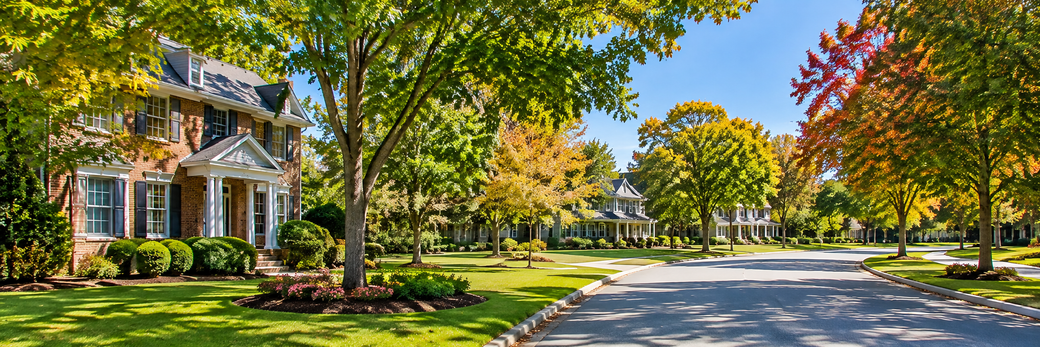
Medford migration and demographics point to measured growth in a homeowner-oriented South Jersey market. Medford Township's population estimate reached 25,612 in July 2025, up 4.6% from its April 2020 estimate base, while 92.8% of residents age one and older lived in the same home one year earlier during 2020 to 2024. For buyers and investors, that combination means incoming demand often concentrates on the relatively limited number of homes that become available.
Medford Migration and Growth: Key Figures
- Population growth: 4.6% from the April 2020 estimate base through July 2025, reaching 25,612 residents.
- One-year residential mobility: 7.2% of residents age one and older had moved within the previous year during 2020 to 2024, compared with 9.6% statewide.
- Median age: 46.7 years in the 2020 to 2024 American Community Survey estimate, compared with 40.1 for New Jersey.
- Longer-term residents: 92.8% of residents age one and older remained in the same home from one year to the next during 2020 to 2024.
These measures distinguish migration from housing turnover. Migration describes where households move across geographic boundaries, while turnover shows how often homes change occupants. In Medford, modest population growth alongside low annual mobility points to a settled market where new listings can draw attention from both local and incoming households. (U.S. Census Bureau)
Who Is Moving to Medford Right Now?
Medford's demographic profile aligns most closely with established households seeking long-term ownership, flexible space, and a South Jersey location in Burlington County. The township had 9,429 households with an average household size of 2.61 people during 2020 to 2024. Its median age of 46.7 also suggests that demand is not centered on one narrowly defined young-adult segment. Instead, the market can appeal to households balancing careers, family needs, changing space requirements, and longer-term lifestyle priorities.
The strongest visible demand profile is therefore broader than a single buyer type. Families may prioritize multiple bedrooms, outdoor space, and practical storage. Hybrid workers may look for a dedicated office or adaptable bonus room. Empty nesters can favor manageable layouts while remaining connected to familiar South Jersey routines. And whichever group they fall into, most newcomers find out quickly that fall Sundays around here belong to the Eagles.
Education levels also shape demand. In 2020 to 2024, 62.2% of Medford adults 25 and older held a bachelor's degree or higher, well above the statewide rate of 43.6%, and the township's median household income was $157,969. That profile tends to support demand for well-kept detached homes, home offices, and properties in the mid-range and luxury tiers.
What Is Drawing People to Medford?
Medford's pull factors begin with its strong ownership profile. Owner-occupied homes represented 88.2% of occupied housing units during 2020 to 2024, signaling a community where many residents make housing decisions with a long-term horizon. That can appeal to buyers who want a property that supports changing household needs instead of a short stop between moves.
Housing value is another part of the decision. The median value of owner-occupied homes was $514,800 in the 2020 to 2024 estimate. That figure is a broad benchmark, not a price for every property, but it helps relocating buyers compare Medford's ownership market with their current location. The more useful comparison is often total value: lot utility, layout, condition, taxes, and the work required after closing. Relocating households weighing those tradeoffs may find it helpful to look at what everyday life and ownership costs look like in Medford before narrowing their search.
Connectivity also supports current household preferences. Broadband subscriptions were reported in 97.6% of Medford households during the same period, making home offices, hybrid schedules, online learning, and digital household management easier to accommodate. That infrastructure does not create demand by itself, but it supports the way many households now evaluate usable space.
Finally, Medford offers a clearly established residential environment. A median gross rent of $1,589 in the 2020 to 2024 period provides a reference point for households weighing flexibility against ownership, while the ownership base suggests that rental demand should be assessed carefully by property type, location, and carrying costs.
The Remote-Work Effect on Medford
Since remote work expanded, households can evaluate Medford for usable space and day-to-day fit rather than choosing solely around a daily office commute. With broadband subscriptions in 97.6% of local households during 2020 to 2024, homes with dedicated work areas and adaptable rooms can have a practical advantage in a hybrid-work search. For those who still commute, the mean travel time to work was 33.9 minutes, so drive times from a specific address are worth testing before making an offer.
Age and Household Trends Shaping Medford
Medford's age and household trends support demand from households at multiple life stages rather than a market dependent on one age cohort. The township's median age was 46.7 in the 2020 to 2024 estimate, above New Jersey's median age of 40.1 and Burlington County's 41.7 in that period. That older profile can support demand for homes that work over time, including first-floor flexibility, manageable maintenance, and spaces that can shift from family use to work or guest use.
At the same time, household size points to plenty of room for family buyers. Medford averaged 2.61 persons per household, a level consistent with demand for more than compact, one-purpose living space. Bedroom count, storage, yard usability, and proximity to everyday services remain important features for this group.
For real estate decisions, the key takeaway is balance. Medford's demographic mix can support both households looking for room to grow and owners seeking a home that remains functional as routines change. That tends to favor well-maintained detached homes with flexible layouts over properties that offer limited adaptability.
How Medford Compares with Burlington County and New Jersey
Medford's 2020 to 2024 profile indicates a more settled, higher-income ownership base than its county and the state as a whole.
| Measure (2020 to 2024) | Medford Township | Burlington County | New Jersey |
|---|---|---|---|
| Median age | 46.7 | 41.7 | 40.1 |
| Moved within the past year | 7.2% | 10.4% | 9.6% |
| Median owner-occupied home value | $514,800 | $354,000 | $454,400 |
| Median household income | $157,969 | $108,111 | $103,556 |
| Bachelor's degree or higher (age 25+) | 62.2% | 42.6% | 43.6% |
For buyers, that means inventory can be especially important because fewer moves do not necessarily mean weak demand. Instead, it can mean that the homes entering the market must serve a wide range of needs, from growing households to relocators seeking a durable long-term fit. Browsing homes currently for sale in Medford gives a quick read on how limited that selection can be in a given price range. For sellers, condition, layout, and clear presentation can matter because buyers may be comparing a limited set of suitable options.
What Out-Migration Tells Us
Out-migration from Medford appears more consistent with normal household change than with a structural demand concern. Moves can follow career changes, family transitions, retirement decisions, shifts in household size, or a desire for a different price point. In a community where 92.8% of residents remained in the same home from one year to the next during 2020 to 2024, departures occur within a generally stable resident base.
For the resale market, the important signal is replacement demand. When an outgoing owner creates an opening for an incoming household seeking a detached home, functional layout, and South Jersey access, normal turnover can support healthy market activity without requiring rapid population growth. Owners planning their own next step can start by checking what their Medford home is worth today, and those buying again locally will want to think through whether to sell first or buy first.
Pro-Tip: Watch the supply of move-in-ready detached homes with flexible work or family space. In Medford, tight availability in that category can be an early indicator of near-term buyer and rental interest.
What Migration Trends Mean for Medford Real Estate
Medford migration and demographics favor a market where property fit can matter as much as headline population growth. The 4.6% rise from the 2020 population-estimate base through July 2025 and the area's high ownership share support continued attention to homes that meet long-term household needs.
Detached homes with multiple bedrooms, usable outdoor space, updated systems, and adaptable rooms can have the broadest appeal. Relocators may value a smoother transition and dependable home-office space, while local move-up buyers may compare layout, condition, and total monthly ownership costs. In the luxury segment, a property's lot, finishes, and functionality can be especially important in distinguishing it from other available homes. First-time buyers, meanwhile, should expect competition for the smaller share of attached and entry-level homes that come to market.
Rental demand can exist beside ownership demand, particularly for households testing the area, transitioning between properties, or seeking flexibility before buying. The local rental benchmark should be weighed against a property's specific condition, expenses, and likely tenant profile rather than treated as a guarantee of investment performance.
Want Help Reading the Medford Market?
The Sam Lepore Group is an 11-person South Jersey team affiliated with Keller Williams Realty, led by Sam Lepore (NJ License ID 0791411). The team works with buyers, sellers, relocators, and investors in Medford and tracks how household trends, available inventory, and pricing line up, so clients can see where a specific home or search fits in the local picture.
Call or text (856) 297-6827, email snlepore@yahoo.com, or learn more on the About Us page to talk through how current trends fit your next Medford move.
FAQ: Migration and Demographics in Medford
Is Medford growing in population?
Yes. Medford Township's population estimate was 25,612 as of July 1, 2025, representing 4.6% growth from the April 2020 estimate base. That is measured growth within a community where most residents remain in place year to year.
How often do Medford residents move?
Not often. During 2020 to 2024, 7.2% of Medford residents age one and older had moved within the previous year, below the Burlington County rate of 10.4% and the statewide rate of 9.6%. That low turnover is one reason well-positioned listings can draw strong attention.
What age group is driving the most growth in Medford?
Medford's available demographic indicators show a mixed household market rather than one dominant age group. The township's median age was 46.7 during 2020 to 2024, while an average household size of 2.61 points to steady demand from families as well as established and empty-nest households.
Is Medford affordable for in-movers compared to where they came from?
Affordability depends on a household's previous market, required space, and total monthly costs. Medford's 2020 to 2024 median owner-occupied home value was $514,800, while median gross rent was $1,589, providing starting benchmarks for a move comparison.
How do migration trends affect home prices and rental rates in Medford?
Migration can influence prices and rents when incoming households compete for a limited group of suitable properties. Medford's 88.2% owner-occupancy rate and 92.8% same-home-one-year-earlier rate suggest that demand can focus sharply on well-positioned listings when supply is limited.
Categories
Recent Posts